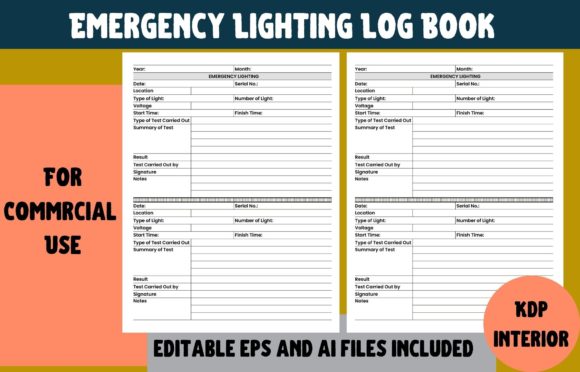
Essential Design for Emergency Lighting Log Book
In the world of graphic design, the Emergency Lighting Log Book stands out as a vital tool, not just for safety but for enhancing the visual and functional aspects of a brand. This comprehensive 103-page document is meticulously designed to ensure that all emergency lighting systems are regularly tested and maintained, while also serving as a powerful branding asset.
Why the Emergency Lighting Log Book Matters in Design
The Emergency Lighting Log Book is more than just a record-keeping tool; it's a reflection of a company's commitment to safety and professionalism. By integrating this log book into your brand's visual identity, you can create a consistent and cohesive look across all your documents and materials. This consistency helps in building a strong, recognizable brand image.
Practical Applications in Graphic Design
The Emergency Lighting Log Book offers numerous opportunities for creative and practical applications:
- Branding and Logo Design: Use the log book to reinforce your brand's visual identity through consistent use of logos, colors, and typography.
- Marketing Materials: Incorporate the log book's design elements into brochures, flyers, and other marketing collateral to maintain a uniform look.
- Social Media Graphics: Create engaging social media posts that highlight the importance of safety and compliance, using the log book's design as a template.
- Website and UI Design: Ensure that the log book's digital version aligns with your website's design, providing a seamless user experience.
- Editorial Layouts: Use the log book's structured format as inspiration for creating clean, organized layouts in other editorial projects.
- Packaging Design: Apply the same design principles from the log book to packaging, ensuring that all branded items have a cohesive look.
Enhancing Visual Communication and Brand Identity
Effective visual communication is key to any successful design. The Emergency Lighting Log Book can be a powerful tool in this regard. By carefully selecting and applying design elements such as typography, color palettes, and imagery, you can create a document that not only meets regulatory requirements but also enhances your brand's visual appeal.
For instance, the choice of a modern, legible font can make the log book more user-friendly, while a well-chosen color palette can align with your brand's overall aesthetic. High-quality imagery and clear, concise instructions further contribute to a polished and professional presentation.
Tips for Selecting and Using Design Elements
When incorporating the Emergency Lighting Log Book into your design projects, consider the following tips:
- Consistency: Ensure that the log book's design elements are consistent with your brand's existing visual identity.
- Readability: Choose fonts and colors that enhance readability and clarity, making the log book easy to use and understand.
- Scalability: Design the log book in a way that it can be easily scaled up or down, whether for print or digital use.
- Visual Hierarchy: Organize the content in a logical and visually appealing manner, using headings, subheadings, and clear sections.
- Audience Expectations: Tailor the design to meet the needs and expectations of the intended users, whether they are facility managers, safety officers, or employees.
By thoughtfully integrating the Emergency Lighting Log Book into your design workflow, you can create a valuable resource that not only ensures safety and compliance but also enhances your brand's visual and functional quality. This attention to detail and commitment to excellence can set your brand apart, making a lasting impression on clients, partners, and employees alike.